Biodiversity Law Centre writes to Minister requesting action and transparency on sardine mortality
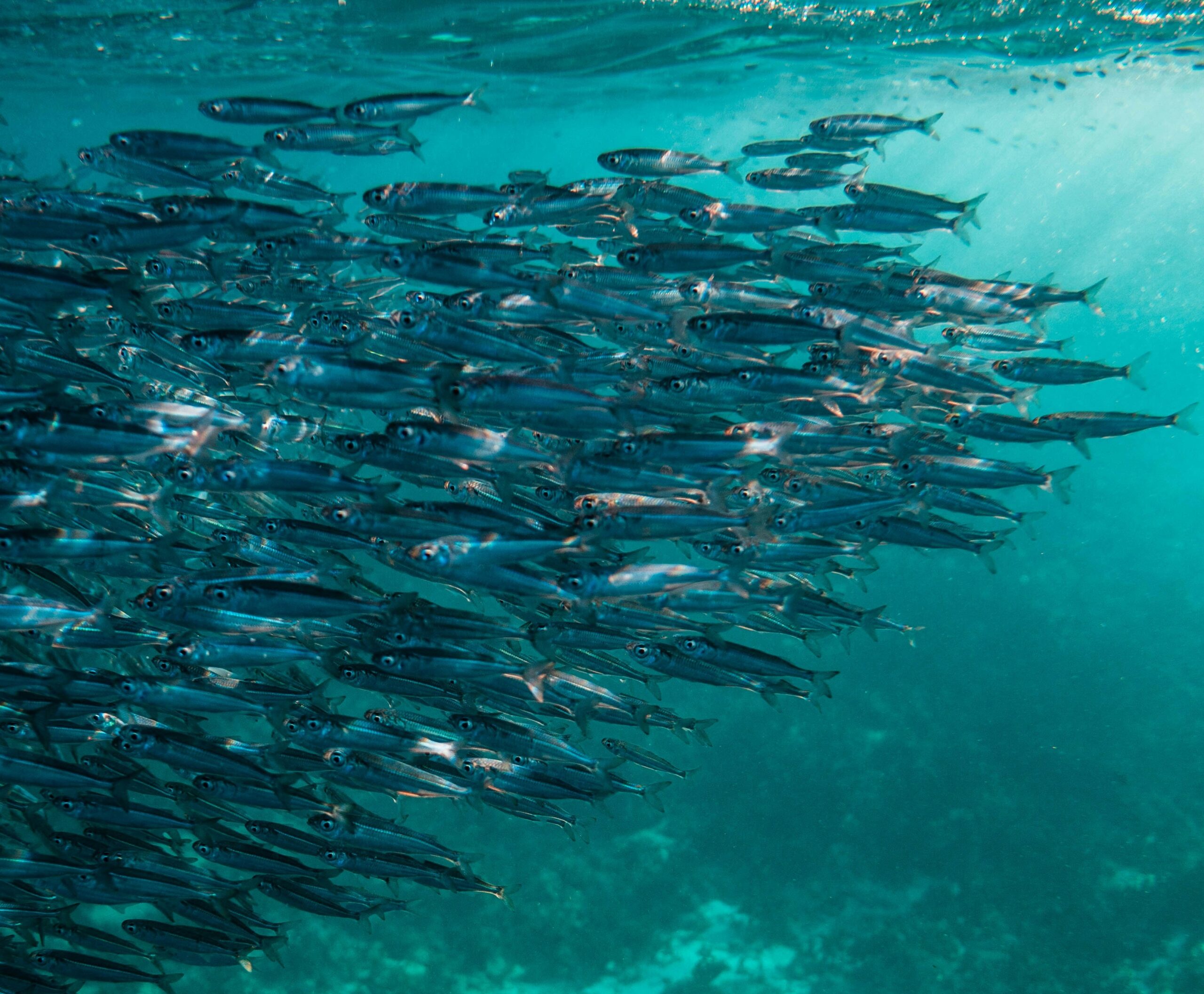
Four environmental non-profit organisations ask Minister to disclose who allowed the continuation of sardine fishing after the mass die-off, and to suspend directed fishing until a new sardine population survey is completed.
The Biodiversity Law Centre and three co-signatories wrote to the Minister of Forestry, Fisheries and the Environment, David Maynier, on Friday, 23 October 2026, asking him to disclose who took the decisions on sardine fishing limits after the mass die-off, under what legal authority, and for what reasons. The letter also asks him to temporarily suspend directed sardine fishing until a new biomass survey shows how many sardine are left after the mortality event.
The co-signatories are The Green Connection, Whale Coast Conservation and Dyer Island Conservation Trust.
The request is urgent. The current catch limit, which purportedly reduces the Total Allowable Catch (TAC) of sardine for the month of October, lapses on 30 October.
The die-off, which the Department attributes to Pilchard Herpesvirus (PHV), began in late July and has been recorded along roughly 2 600 km of coastline. Sardine are a small forage fish on which a wide range of marine life depends. They are also important to small-scale fishers, who use sardine as bait and rely on the snoek, yellowtail, Geelbek and other predatory fish that feed on sardine. As much a part of our natural heritage as the sea itself, sardine are, by law, entrusted to government to protect and preserve for present and future generations. Decisions relating to sardines, therefore, are of public interest.
After taking no action for over a month after the outbreak, the Department limited directed sardine catches to 25% of each right holder’s remaining 2026 TAC from 7 September to 2 October, and then to 33% from 3 to 30 October.
The TAC itself, 51 800 tonnes of sardine, was recommended in April 2026 based on a biomass survey done before the outbreak of PHV. The Department has said the full impact of the outbreak on South Africa’s sardine population will only be understood once its next biomass survey is done. Considering the tender for the survey vessel only closed on 23 October 2026, a survey is unlikely to happen by the “end of year” as suggested by the Department. The survey results would then still need to be compiled and analysed.
As it stands, therefore, the decision to allow fishing to continue is based on a TAC which is based on a population that no longer exists.
The organisations argue that allowing fishing to continue in these circumstances contravenes the precautionary approach required by South African law, which does not make action conditional on cost-effectiveness. It also fails to take account of the integrity of this ecosystem and the livelihoods that depend on it.
The signatories therefore welcome the DFFE’s statement that a lack of full scientific certainty should not prevent appropriate measures, as well as its disclosure (upon request) of the Small Pelagic Scientific Working Group’s recommendations. However, the decisions that purportedly followed, who took them (the decision-maker must be lawful), and the reasons for them, have not been disclosed or made publicly available, despite multiple requests. Such decisions must be transparent, and decision-makers must be accountable.
For these reasons the letter asks the Minister to:
- disclose the decisions taken on sardine fishing since the die-off began, including who took them, under what legal provision and for what reasons;
- as a precautionary measure, temporarily suspend directed sardine fishing until the new biomass survey is complete and a new TAC published; and
- undertake to publish future decisions, with reasons.
Tabitha Paine, Senior Attorney in the Biodiversity Law Centre’s Oceans programme, says: “Sardine have died along some 2 600 km of coastline, and no one, including the Department, knows how many are left. Yet the Department has allowed fishing to continue under a TAC set before the die-off, and in October it raised the catch limit. If fishing is paused and the stock turns out to be healthy, the fish are still there to be caught later. If fishing continues and the stock has collapsed, that harm cannot be undone – for the sardine, for the penguins and snoek that depend on them, and for the small-scale fishers who depend on the snoek.
“The law requires a risk-averse and cautious approach when the science is uncertain. Sardine are a part of our shared natural heritage, held in trust by government for present and future generations. Yet the public, and the fishers whose livelihoods are at stake, have not even been told who made these decisions, or on what basis.”
ENDS
About the signatories
- The Biodiversity Law Centre is a nonprofit law clinic that uses the law to protect and restore biodiversity across Southern Africa. Through its Oceans programme, the BLC works to ensure an ecosystem-based approach to marine biodiversity governance.
- The Green Connection is a registered non-profit environmental justice organisation established to empower coastal communities, small-scale fishers, and civil society to participate meaningfully in environmental decision-making processes across South Africa
- WCC is an independent environmental NGO that has spent 20 years protecting the Overstrand’s unique natural and marine environments through education, awareness and oversight, including advocating for the conservation of the endangered African Penguin and its dwindling food supply.
- DICT is a marine conservation NGO founded in 2006 that protects the Greater Dyer Island ecosystem through scientific research, penguin and seabird rescue and rehabilitation, environmental education and advocacy for precautionary, science-based fisheries management to safeguard marine biodiversity and local livelihoods.
For media enquiries please contact:
Annette Gibbs
Mobile: +27 (0)82 467 1295
Email: annette@gibbsmedia.co.za