Appeal against Environmental Authorisation for West Coast marine prospecting project
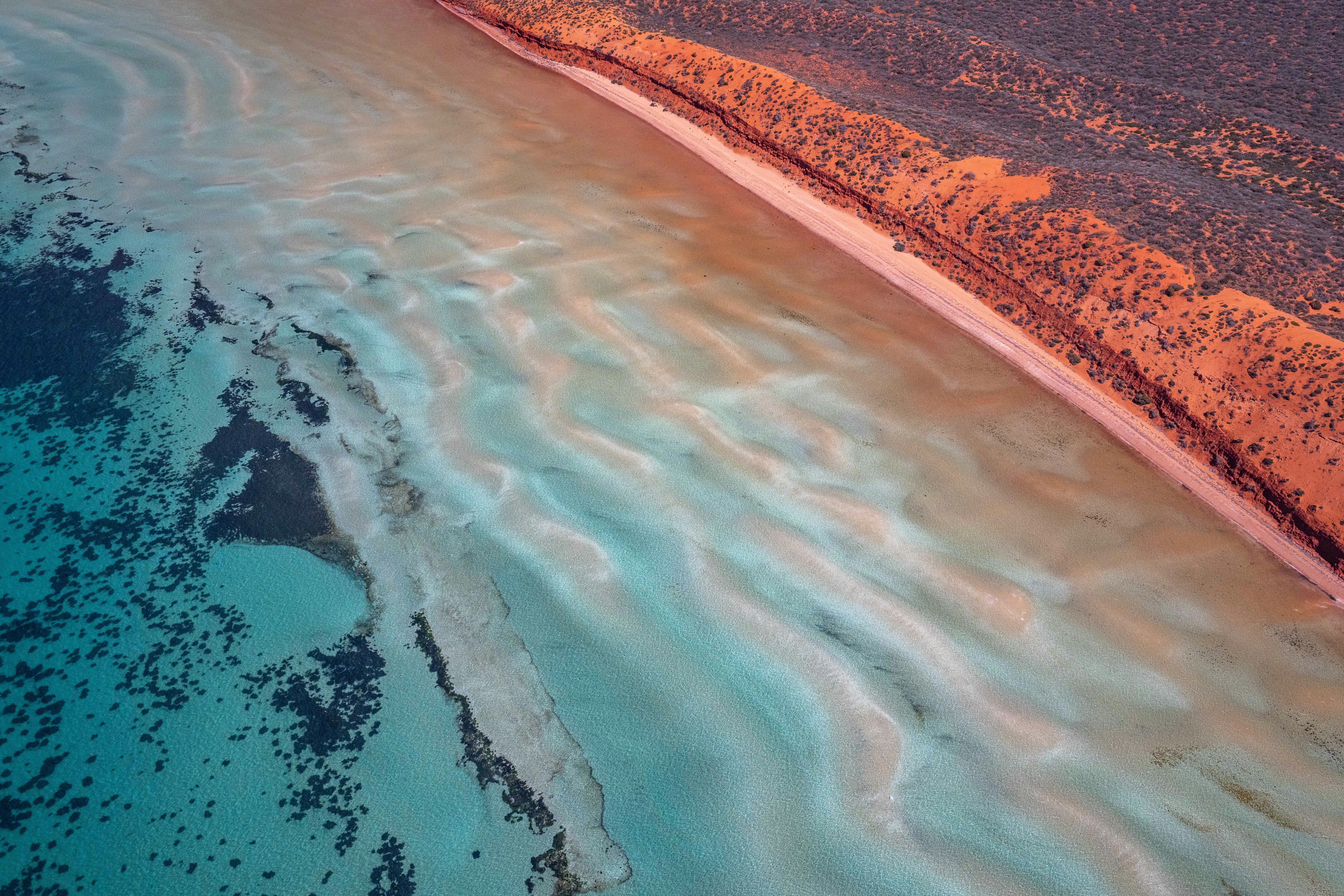
What happens when a search for minerals takes place in one of South Africa’s most productive and interconnected marine ecosystems? The Biodiversity Law Centre (BLC), together with Conservation Outcomes and Masifundise Development Trust (Masifundise), says we need to ask that question before the damage is done.
On 11 August 2026, the BLC, together with Conservation Outcomes and Masifundise, submitted an appeal against the Department of Mineral and Petroleum Resources’ (DMPR) decision to grant environmental authorisation to Trans Hex Heavy Minerals Mining (Pty) Ltd (Trans Hex) for extensive mineral and gemstone prospecting along the West Coast. The authorisation covers six marine concessions stretching over approximately 321 km² of ocean, including from the deep edge of the surf zone (the point offshore where the waves are still breaking, but beyond which the waves generally stop breaking), to 500m offshore, for a period of up to five years. This is not simply a case of looking for minerals beneath the seabed. The approved prospecting includes 1,650 drill samples, 2,230 vibracore samples and 625 bulk grab samples, as well as geophysical surveying. Together, these activities will disturb the seabed across an ecologically important stretch of the West Coast.
Why does this matter?
The proposed prospecting sits within the southern Benguela upwelling system – one of the most productive marine ecosystems in the world. Its extraordinary productivity supports a food web that stretches from microscopic plankton, through sardines and anchovy, to larger fish, seals and seabirds, including the Critically Endangered African penguin. The health of this system depends on the functioning of the ecosystem as a whole, not simply on whether individual species or fisheries are temporarily affected. This is an ecosystem already under pressure.
Small pelagic fish populations have declined, with consequences cascading through the food web. The appeal points out that the combined landings of anchovy, sardine and round herring fell by 38% between 2016 and 2022, while predators dependent on these fish are also experiencing declines. Yet the environmental assessment largely considered these impacts through the narrow lens of commercial fishing, rather than asking what additional disturbance means for an already-stressed ecosystem.
The project also lies across the mouths of the Olifants and Sout estuaries, both classified as Endangered in the 2025 National Biodiversity Assessment. Despite the very high aquatic biodiversity sensitivity identified through the Screening Tool, no Aquatic Biodiversity Specialist Assessment was undertaken for these estuaries, which were largely ignored by the Environmental Assessment Practitioner (EAP).
There are also important implications for climate change and the ocean’s role in regulating our climate. Much of the area contains organically rich seabed sediments that store carbon. The proposed drilling and sampling could disturb sediments many metres deep, yet the environmental assessment did not assess any of the potential climate implications of this disturbance or adequately assess the project’s own greenhouse-gas emissions. Across all of these deficits, there was a failure to properly assess the cumulative impacts of the proposed prospecting alongside existing, authorised and reasonably foreseeable activities affecting the same marine environment. In an already pressured ecosystem, considering each activity in isolation risks seriously underestimating the combined effects on biodiversity, fisheries and coastal communities.
What about the people who depend on this coast?
The West Coast is not an empty expanse of ocean. Small-scale fishing communities in Doringbaai, Papendorp, Ebenhaeser and Lutzville depend on marine resources for livelihoods, food security, cultural practices and their way of life. Yet the appeal argues that their evidence about the impacts of the project was not adequately engaged with, and that the livelihood impacts were never properly quantified or qualified.
We are particularly concerned that the decision treats the ocean as a collection of separate pieces (seabed, fish, estuaries, fisheries and communities) rather than as a connected system. What was factually important to consider is that what happens in one part of the ecosystem can reverberate through the whole.
The problem is bigger than one prospecting application
Our appeal raises four fundamental concerns.
First, the environmental assessment did not adequately assess the environment into which the prospecting would be introduced. It failed to properly consider the Benguela ecosystem, the nearby estuaries, climate change and cumulative impacts.
Second, it did not adequately establish why the project should proceed at all. The assessment did not meaningfully consider alternatives, including alternatives to the location, footprint, technology or operation of the project.
Third, affected communities were not meaningfully heard. The appeal raises serious concerns about the treatment of information provided by small-scale fishers and environmental authorities, and about important documents not being made available during the public participation process.
Fourth, the EA was granted before the marine spatial planning framework needed to guide decisions about competing uses of our ocean space was in place. In our view, allowing extractive activities to proceed first risks undermining the very planning process intended to determine where and how different activities should take place.
Why we are appealing
This appeal is about how we make decisions about South Africa’s marine environment. The West Coast is home to extraordinary biodiversity, productive fisheries, globally important ecosystems and communities whose lives and livelihoods are intimately connected to the sea. Decisions about its future must be based on complete information, meaningful participation and an understanding of the cumulative pressures already facing the ecosystem.
The BLC, Conservation Outcomes and Masifundise are therefore asking that the environmental authorisation be set aside. We will continue to follow this matter closely, and to use the law to defend the West Coast’s interconnected marine and coastal ecosystems and the people who depend on them.
Link to the appeal and annexures below: